

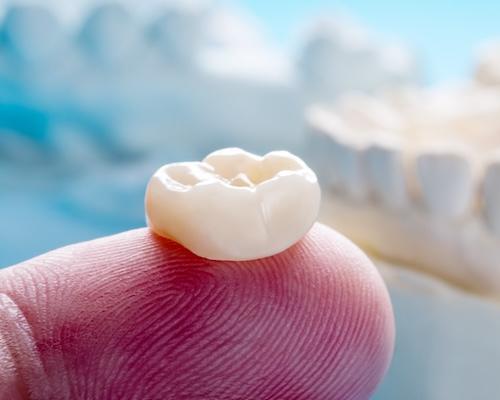
 A crown, also called a cap or tooth cap, is a dental restoration used to strengthen and support a damaged or decayed tooth. Because the crown surrounds a tooth, it restores strength and function so you can chew comfortably and improves smile aesthetics with a natural-looking solution.
The Process for Getting a Dental Crown
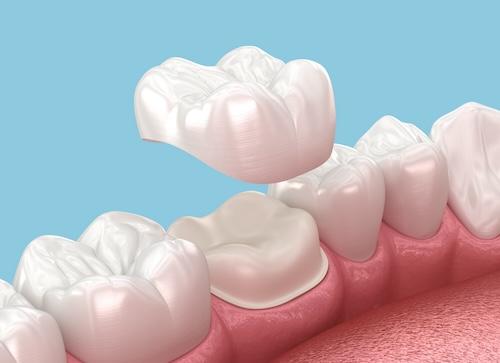 Many patients avoid the dentist because they fear dental treatment will be painful and complicated. The process for placing crowns on teeth is actually quite simple:
- Step 1 – Comprehensive Evaluation: The first step in the process of creating tooth crowns is a comprehensive evaluation. One of our dentists will inspect the teeth, gums, jaw joints and other support structures of the mouth, carefully looking for signs of stress, decay or instability. Using diagnostic X-rays, moulds and impressions, they will gain a clear picture of the condition of your mouth to address any health or functional concerns during treatment.
- Step 3 – Tooth Preparation: With your personalised treatment plan in hand, we prepare the tooth by removing a small amount of its structure to accommodate the dental crown. We will apply a provisional restoration that you will wear while the final dental crown is being created. This temporary dental cap will protect the prepared tooth until placement of the final restoration.
- Step 4 – Final Crown Placement: Because so much planning goes into the treatment process, the final step is quite simple and predictable. We will remove the temporary, test the final crown for fit and colour and ensure that you can bite down comfortably with it in place. The final step is to cement the crown on the tooth and gently polish it to a smooth sheen.
Dental Implant Planning and Restoration
At Wright Street Dental Clinic, we can assist with the planning and restorative stages of dental implant treatment. Using our 3D digital X-ray and scanning technology, we can assess your teeth, gums and surrounding structures and discuss whether dental implants may be an appropriate option for your individual circumstances.
We do not perform the surgical placement of dental implants at our clinic at present. If you decide to proceed, we can coordinate with an appropriate external practitioner for the surgical placement of the implant fixture. Once the implant has healed and is ready for restoration, you can return to Wright Street Dental Clinic for the crown scanning and fabrication which will be fitted to the dental implant. Our team can remain involved throughout the process, helping to coordinate your care and answer questions as you move through the different stages of treatment.
Individual suitability, treatment requirements and outcomes vary. Your dentist will discuss your circumstances, available treatment options and any relevant risks before recommending treatment.

 You can expect that in the days following crown placement, the crowned tooth may feel a little odd when you bite down, but this is normal. Soon, your mouth will get used to the feel, and you'll likely forget it's even there.